
How to record a grandparent's voice before it's too late
Short answer. Use the phone you already have, and record a grandparent's voice in short clips over many visits, not in one long interview. Record the ordinary things first: their laugh, how they say your child's name, a song, a recipe told out loud. Ask before you press record, keep the phone on the table, and save each clip somewhere safe and private on the day you record it. In Dear Moment, you can record a voice note, get a transcript, and share it only with the family members you choose.
Why we wrote this
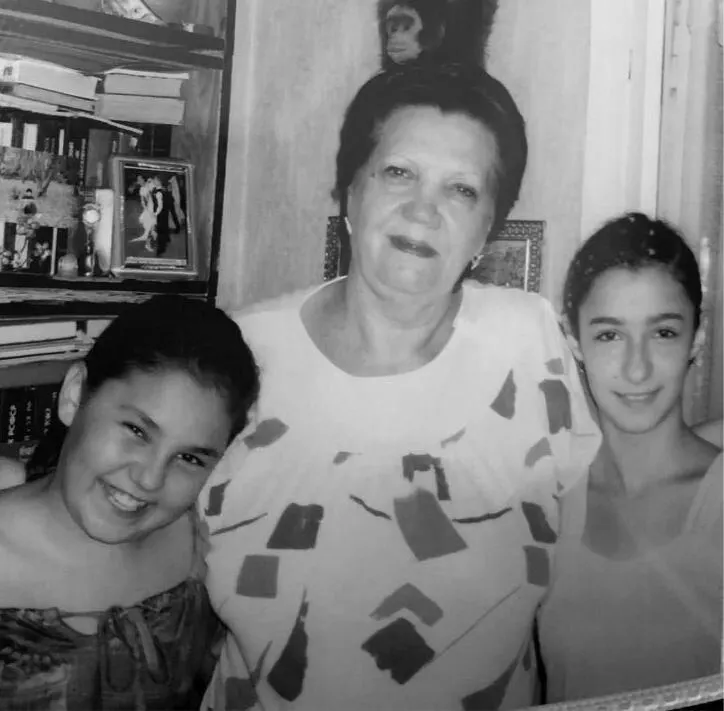
Grandma Nene largely raised my sister Nargiz and me when we were young, because our mother worked long hours. She cooked our food, talked to us about school, and loved us deeply. We were both very close to her.
She told hilarious stories about seeing Ronaldo in her dreams. I remember the way she laughed, and her advice about acceptance in life. She passed away last year. We have photos of her, but no recordings of her voice.
Record short clips, not one big interview
Most guides to recording grandparents describe a sit-down interview: a list of questions, a quiet room, an hour or more. Some families do this well. For others, a formal interview is easy to put off, and some grandparents feel as if they are being tested.
Short clips are easier for everyone. Thirty seconds to two minutes, recorded whenever the moment comes: at Sunday lunch, on a video call, while they hold the baby. Short clips are also easier to find and play back later than a recording of an hour or more.
It was a dance at the village hall, spring 1962. He asked my sister first, you know. She said no, so he came over to me. He stood on my feet twice, and I still said yes to the next one.
How to record a grandparent's voice on your phone
You don't need a microphone or a special app. You need a quiet room and a few habits:
- Ask first, every time. Say what it is for: "This is for the children, not for posting anywhere." Never record in secret.
- Put the phone on the table. About an arm's length away, screen down. Holding it up like a microphone makes most people stiff.
- Find the quiet. Turn off the television and the radio, and move away from the fridge, the kitchen fan and the window. Soft furniture helps; a tiled kitchen echoes.
- Check the first ten seconds. Play back the start before you carry on. It is better to find out now than at home.
- Choose the right time of day. If they tire easily, keep it short and record when they have the most energy.
- Keep recording. Don't stop the moment the story ends. The laugh, the "oh, and another thing", the argument about the date: that is often the best part.
- Say the date and who is speaking. Or write it down straight after. In ten years, nobody will remember which Christmas it was.
What to record
Start with small things. They are quick to record and easy to forget to record:
- Their laugh. It is hard to catch on purpose, so keep recording after a story ends.
- Your child's name, as they say it. And any pet name they use for the children.
- A greeting or a goodbye. The thing they always say when they pick up the phone, or before they hang up.
- A song or a lullaby. Especially one they sang to you, or one from their own childhood.
- A recipe, told out loud. Not the written recipe: the version with "a handful" and "until it looks right".
- A bedtime story read to a grandchild. Your child can listen to it again at bedtime.
- Phrases in their first language. Sayings, blessings, and the names they call the children.
- Their advice. Ask "What do you want the children to know?" and then stop talking.
Questions to ask a grandparent
When you do want a story, one good question is enough for one clip. Open questions that start with "tell me about" work better than yes-or-no questions. These are a starting point:
- Tell me about the house you grew up in. What could you hear from your bed?
- What did you eat on a special day when you were small?
- How did you meet Grandma (or Grandad)? What did you think the first time?
- What was your first job, and what did you buy with the first money?
- What was I (or my mum or dad) like as a baby?
- What is a song you still know every word of?
- What was the best trouble you ever got into?
- What has changed the most since you were my age?
- What are you proudest of?
- What did you know how to do at my age that people don't learn now?
Follow up with "What happened next?" or "What did that feel like?", and let silences run. People often add the best detail after a pause.
Let the grandchildren ask. Grandparents answer a five-year-old differently from an adult. Give your child one question to ask, and record the answer. You get the grandparent's voice and your child's voice in the same clip.
Recording a grandparent who lives far away
If the grandparents live in another country, phone and video calls may be the main way your children hear them. You can record those calls:
- Phone calls on iPhone. In some regions and languages, the iPhone can record a call. Apple says both people hear a notice that the call is being recorded, and the recording is saved in the Notes app. Apple also asks you to get the other person's consent first.
- Speakerphone and a second device. Put the call on speaker and record on another phone or a tablet. The quality is lower, but it works with any phone and any calling app.
- Video calls. Ask the grandparent to hold the phone still and close, or ask someone at their end to record a clip on their phone and send it to you.
The rules for recording calls are different in each country. Whatever the rules, tell the person and ask first.
If your family speaks more than one language, record in the language your grandparent thinks and jokes in. Stories often sound flat in a second language. Add a short note in English afterwards, so that everyone knows what the clip is about.
If a grandparent is ill or their memory is changing
Keep sessions short. Familiar topics and old songs often work better than questions about dates and names. If they tell a story differently from how you remember it, don't correct them. If a day is not good, try another day, or just record them talking to the children.
Keep the recordings safe
Recordings often get lost after they are made. They stay in a voice memo app, a chat thread or an old phone, and disappear when the phone is replaced or the chat is deleted. Do three things on the day you record:
- Name it. Who, what and when: "Nana, lullaby, 12 October 2026".
- Keep a second copy. In a different place from the phone you recorded on.
- Add a line of context. What the story is about, who was there, and anything a listener would need to know to follow it.
Think about where the recordings go, too. A grandparent agreed to a recording for the family, not to a public post. Keep the clips somewhere private, and be careful with services that offer to turn a voice into an AI copy. Ask the grandparent before you upload their voice to one.
Where Dear Moment fits
Dear Moment is a private family journal for photos, videos, notes and voice notes. You can record a voice note in the app, and it is transcribed for you, so a clip can be read as well as played. Each moment has a date, so the recordings line up on one timeline with the photos from the same day. You choose who sees each moment: share Grandma's lullaby with the whole family, and keep another clip just for you. Family members open what you share from a private link, with no app and no account.
Nothing is posted publicly, there are no ads, your data is stored in the EU, and your memories, including voice recordings, are never used to train AI. You can ask us to export everything at any time. For more ideas on what to capture, see our baby journal prompts.
Questions
What is the best way to record a grandparent's voice?
Use the phone you already have. Put it on the table between you, not in their face, and record short clips over many visits rather than one long interview. Start with small things, like their laugh or how they say your child's name.
Do I need a microphone to record a grandparent?
No. A modern phone in a quiet room, about an arm's length away, is good enough. Turn off the television, move away from the kitchen fan, and check the first few seconds before you carry on.
How do I record a grandparent who lives in another country?
Ask first, then record the call. On iPhone, call recording is available in some regions and languages, and both people hear a notice that the call is being recorded. Or put the call on speaker and record it on a second device. Short, regular calls work better than one long session.
What if my grandparent does not want to be recorded?
Respect it, and do not record in secret. Explain that it is for the grandchildren, not for posting anywhere. Many people relax when the recording is a short clip of them reading a story or singing a song, rather than an interview about their life.
Should I record in their first language?
Yes, if it is the language they think and joke in. Stories often sound flat in a second language. Add a short note in English afterwards, so that family members who do not speak the language know what the clip is about.
Sources
- Call recording on iPhone, checked on 12 October 2026: Apple Support, "Record and transcribe a call on iPhone"
- Dear Moment: pricing and FAQ, privacy policy, our team
Record the first clip this week. Try Dear Moment free for 14 days, then $5.99/month or $39.99/year. Cancel anytime before your trial ends and you won't be charged.